
- August 10, 2026
- Clinic Director
- Comment: 0
- Blog
Improper Posture and Back Pain | Causes
Why the way you sit, stand and move every day matters more to your spine than any single treatment.
By Vasily Maslukovs, Doctor of Chiropractic | The Back Pain Centre, South Woodford
In my last article, I explained what a chiropractic adjustment actually does to your body, and why the nervous system matters more than most patients realise. This time I want to look at what happens before patients ever reach the treatment room, specifically the habits and daily loading patterns that create the need for treatment in the first place.
Why improper posture and back pain so often go together
Posture is not simply about standing up straight. It describes how your spine is positioned and loaded while you sit, stand, sleep and move. When that loading is uneven for long enough, the muscles, discs and joints supporting the spine come under sustained strain rather than the brief, varied loads they are built to handle.
Why repetition matters more than a single position
This is why improper posture and back pain are so closely linked in clinical practice. The spine can tolerate short periods of poor positioning without lasting effect. What it struggles with is repetition. A rounded lower back held for eight hours a day, five days a week, adds up to a very different load than the same position held for five minutes.
Desk job back pain and the hidden cost of sitting
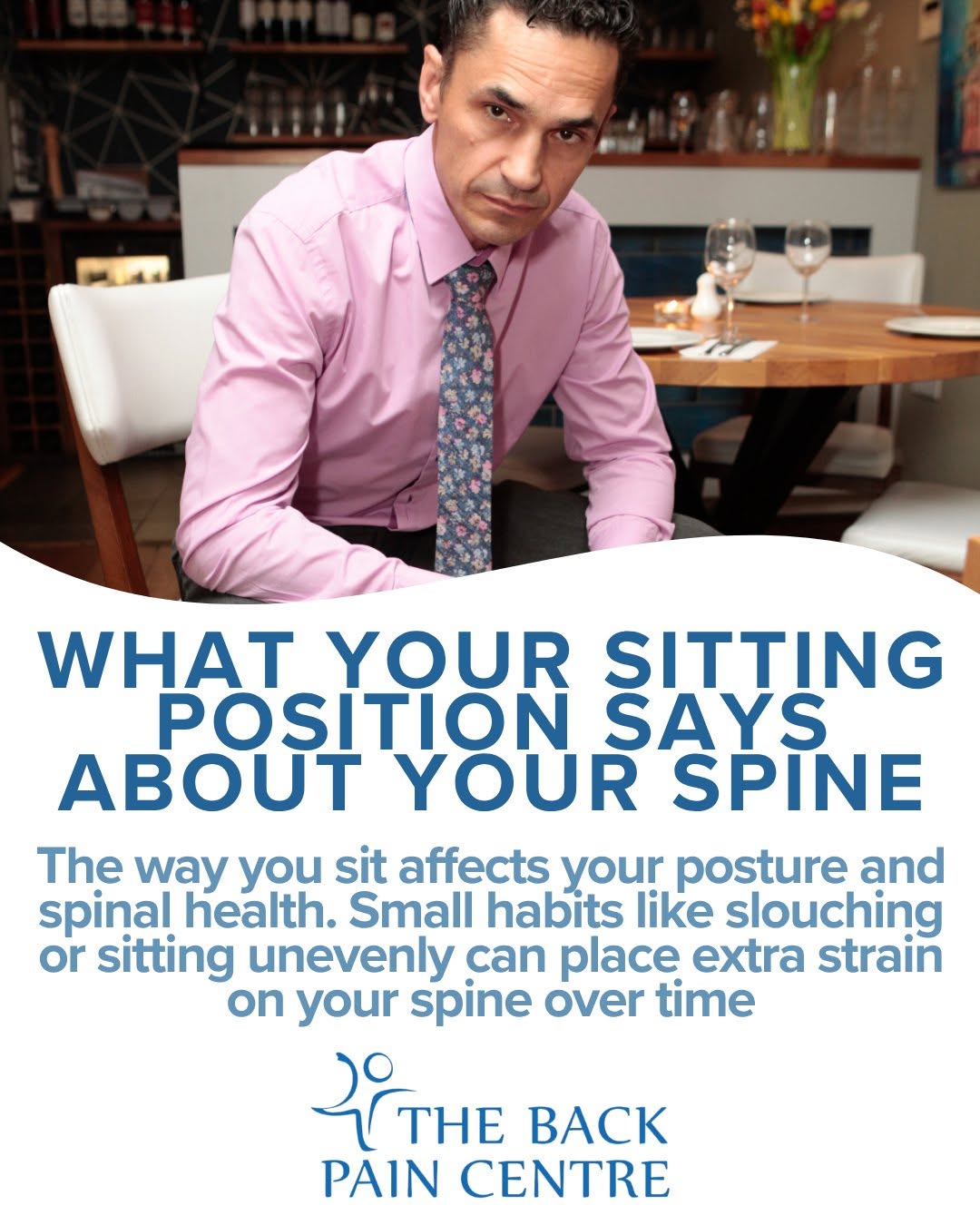
Office or desk job back pain is one of the most common patterns I see. Long periods of sitting, often with a forward head position and rounded shoulders, place additional pressure on the lower spine and change how the surrounding muscles work. Over time the muscles that should support an upright posture switch off, while others tighten to compensate.
What the HSE guidance recommends
The Health and Safety Executive provides detailed guidance on setting up a workstation to reduce this kind of strain, including screen height, chair support and regular breaks from sitting. It is worth following even outside a formal office, since the same principles apply to laptops used at kitchen tables or on sofas.
Spinal loading in daily life goes beyond the desk
Spinal loading in daily life is not limited to work. How you lift, how you sleep, how you carry a bag over one shoulder and how you stand while cooking or queuing all contribute. None of these actions cause harm in isolation. The effect builds when the same imbalance is repeated day after day without variation or correction.
Why treatment and posture work together
This is a key reason manual therapy works best as part of a broader treatment package rather than in isolation, a position supported by the NICE guideline on low back pain. Addressing spinal function in the clinic has to be paired with changes to the postural habits that placed strain on the spine in the first place.
Footwear and the kinetic chain
Footwear is often overlooked in conversations about posture, but it is the first point of contact between the body and the ground. The kinetic chain, the connected sequence of joints and muscles running from the feet through the ankles, knees and hips and into the spine, means that changes at ground level rarely stay at ground level.
Why what happens at the feet matters above the feet
Footwear that’s typically recommended
When choosing healthier footwear, you have two main options:
- Barefoot-style shoes offer a wide toe box for natural toe spread, a thin flexible sole that activates intrinsic foot muscles, and a low heel-to-toe drop that promotes even force distribution and natural gait.
- If you prefer traditional shoes, look for a wider toe box to reduce forefoot pressure, and consider adding arch support tailored to your foot type if needed for better alignment and comfort.
What proper assessment looks for
At The Back Pain Centre, part of every new patient examination looks specifically at how posture and movement patterns may be contributing to a person’s symptoms. This is not guesswork. It involves observing how someone sits, stands and moves, alongside the clinical findings from a full assessment, before any recommendations are made.
Common bad posture effects we see
Some of the bad posture effects I see most often include a forward-leaning head position, one shoulder sitting higher than the other, and a pelvis that tilts to one side under load. Each of these can place uneven pressure through the spine, and each is generally something a person can learn to notice and correct with guidance.
Practical changes worth making
You do not need a perfect posture held constantly. What matters more is variation and awareness. A few habits I recommend to patients include:
Changing position every 30 to 40 minutes rather than remaining static for hours. Setting up a screen and chair so the head does not need to tilt forward. (How to set up your desk – advice from The Back Pain Centre)
Being mindful of how weight is carried, particularly bags worn on one shoulder.
Building brief movement breaks into the working day rather than saving all activity for the evening.
None of these changes will resolve back pain on their own if the underlying spinal function has not also been addressed. But alongside appropriate treatment, they form part of the wider system that determines whether relief lasts.
Persistent back pain rarely has a single cause, which is why relief that lasts tends to come from identifying what is actually driving the problem rather than treating the symptom in isolation. A proper assessment looks at posture, movement patterns and spinal function together, so that any recommendations, whether that is adjustment, exercise or lifestyle change, are based on what is actually happening in your body. You can read more about how we approach back pain at The Back Pain Centre.
To learn more about chiropractic care in South Woodford, visit our chiropractic service page. We also offer physiotherapy sessions. Call us to book an appointment on 02089 893 338 or complete our contact form today. We look forward to welcoming you to the clinic soon.
About the author
Vasily Maslukovs, Doctor of Chiropractic has been treating backs and necks since 1994, beginning his clinical career in Latvia before qualifying as a UK registered chiropractor. He has been the owner and clinical director of The Back Pain Centre in South Woodford since 2012. His approach is built on the principle that lasting results require both precise clinical treatment and genuine patient understanding of the body, of the condition, and of the habits that either support or undermine recovery. You can connect with Vasily on LinkedIn.