
- June 22, 2026
- Clinic Director
- Comment: 0
- Blog
What a chiropractic adjustment actually does to your body
Understanding what chiropractic is, and what it is not, changes how patients approach their own care.
By Vasily Maslukovs, Doctor of Chiropractic | The Back Pain Centre, South Woodford
The most common question new patients ask me is not about their diagnosis or their treatment plan. It is, ‘Will this hurt?’ The second most common question is, ‘What is chiropractic, exactly?’ After thirty years of practice, I still think that second question is the more important one. Patients who understand what chiropractic actually does to the body tend to get significantly better results than those who do not.
This article is my attempt to answer it properly.
What is chiropractic and what it is not
If your main exposure to chiropractic has been social media, you could be forgiven for thinking it involves someone pressing very hard on a person’s back until something makes a loud noise. Those videos exist in enormous numbers. They perform well because the sound is arresting. They do not, however, represent the profession.
The noise sometimes associated with a chiropractic adjustment is the release of dissolved gas from the fluid inside a joint. This process is called cavitation, and it is a byproduct of joint movement under certain conditions, not an indicator that anything meaningful has happened. Some adjustments produce it. Many do not. Whether it occurs has no bearing on the clinical outcome.
Chiropractic oversight in the UK
Chiropractic is a regulated healthcare profession in the UK. All practising chiropractors must be registered with the General Chiropractic Council, the statutory body established by Parliament to oversee the profession. The GCC sets the standards of education, practice, and conduct that every registered chiropractor must meet. In clinical terms, that registration means the practitioner is trained to assess and address problems with the function of the spine and musculoskeletal system, and their effects on health more broadly.
What actually happens during a chiropractic adjustment
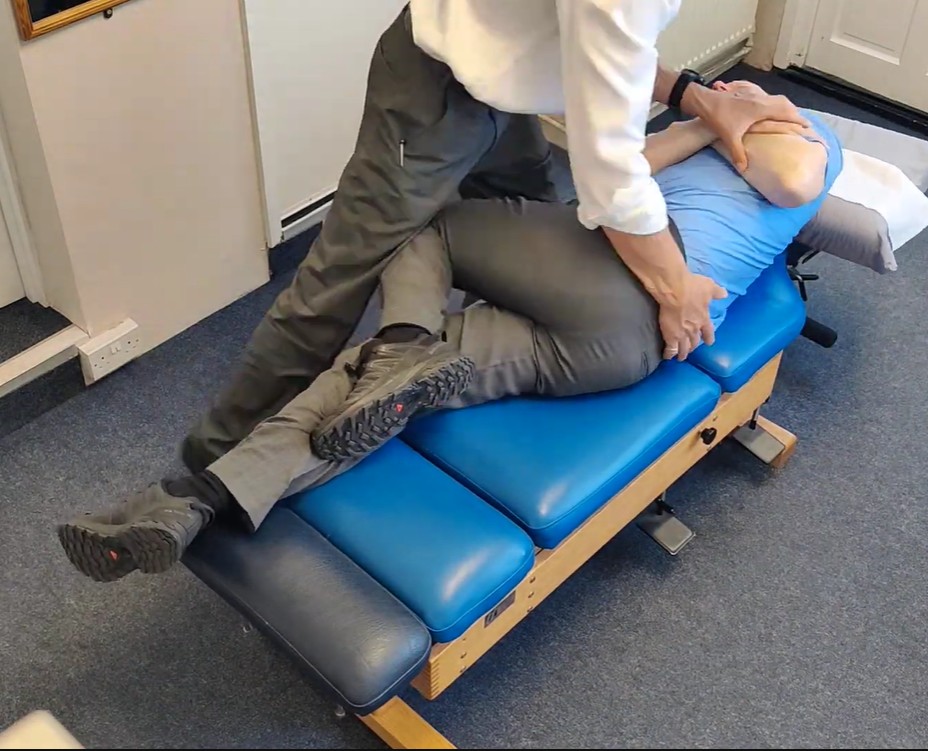
There are a range of ‘spinal manipulations’ that healthcare practitioners many perform but a chiropractic adjustment is one which is performed by a chiropractic and follows very specific rules, using controlled, targeted movements. The purpose is to restore normal range of motion to a joint that has become restricted, and in doing so, to improve the function of the surrounding tissues and the nerves passing through or near that area.
The spine is not simply a stack of bones. It is the main structural and neurological highway of the body. The spinal cord runs through it, and nerve roots branch out from between each vertebra to supply sensation and motor control to virtually every part of the body. When spinal joints move poorly, whether through injury, sustained poor posture, or accumulated physical stress, this affects not just local movement, but the quality of neurological signalling throughout the body. Some research suggests that chiropractic adjustments may affect how the brain receives and processes information from the joints and muscles of the spine. This may influence muscle coordination, movement patterns and neuromuscular control. Researchers continue to study these effects and their clinical significance.
What is the expected outcome?
The goal of a chiropractic adjustment is to restore normal joint mechanics so the nervous system can function without interference. When that happens, patients often report improvements that go beyond simple pain relief: easier movement, better posture, improved muscle function, and a body that feels less like it is working against itself. The extent of those changes varies between individuals and depends on the nature of the problem, how long it has been present, and how actively the patient supports the process outside the clinic.
What a chiropractic assessment involves
No responsible chiropractor treats a patient without first properly examining them. At our South Woodford clinic, new patients undergo a structured assessment covering up to 62 individual clinical checks before any treatment decision is made.
That assessment covers neurological testing, orthopaedic testing, postural and spinal analysis, and a detailed health history. Where clinically indicated, we take on-site X-rays. The purpose is not to generate paperwork. It is to understand what is actually happening in the patient’s body before deciding what to do about it. Equally important is establishing whether a chiropractic adjustment is appropriate at all.
Using clinical data not guesswork
Chiropractic is safe when it is practised correctly. Practising it correctly means making informed treatment decisions based on a thorough clinical picture, not applying a standard protocol to everyone who walks through the door with back pain. There are some conditions for which a chiropractic adjustment is not appropriate, and a competent clinician needs to be able to identify those.
After the assessment, we present our findings clearly. We explain what we found, what we recommend, and why. We answer questions. Then we give the patient the information they need to make their own decision about whether to proceed.
Why the nervous system matters more than people realise
Most people come to a chiropractor for a pain problem. They leave, if things go well, with less pain. But the underlying mechanism is neurological, and understanding that matters. It explains why chiropractic can affect things that patients do not expect.
The brain and body communicate constantly through the nervous system, and the quality of that communication depends partly on how well the spine is functioning. Restricted joints, poor posture, and accumulated spinal stress create a kind of low-level interference in that system. Patients often adapt to this over time and stop noticing it. When treatment removes the interference, many find themselves surprised by how different normal function feels.
The importance of patient education
This is why I consistently stress that chiropractic and patient education belong together. An adjustment can restore function in the treatment room. Whether that function is maintained depends on what the patient does outside it -their posture, their movement habits, their working environment, how they support their body day to day and whether they stretch each day. The nervous system responds to all of it, not just to what happens during a clinic appointment.
In the next article in this series, I’ll examine posture and spinal loading in detail, covering the specific habits and positions that create the conditions for back and neck pain over time and what can be done about them. You can also read about why most back pain treatment fails in the previous article or find out more about the chiropractic services we offer at The Back Pain Centre.
About the author
Vasily Maslukovs, Doctor of Chiropractic has been treating backs and necks since 1994, beginning his clinical career in Latvia before qualifying as a UK registered chiropractor. He has been the owner and clinical director of The Back Pain Centre in South Woodford since 2012. His approach is built on the principle that lasting results require both precise clinical treatment and genuine patient understanding of the body, of the condition, and of the habits that either support or undermine recovery. You can connect with Vasily on LinkedIn.
Frequently asked questions
What is chiropractic and how does it work?
Chiropractic is a regulated healthcare profession focused on the function of the spine, musculoskeletal system, and nervous system. It works by restoring normal movement to restricted spinal joints, which reduces interference in the nervous system and allows the body to function and communicate more efficiently.
Is chiropractic safe?
Chiropractic is safe when practised by a qualified, registered chiropractor following a thorough clinical assessment. All UK chiropractors must be registered with the General Chiropractic Council, which sets and enforces standards of education and practice. A proper assessment before treatment is essential to ensure the approach is appropriate for each individual.
What happens during a chiropractic adjustment?
A chiropractic adjustment is a controlled, targeted movement applied to a specific spinal or peripheral joint to restore its normal range of motion. It is performed by hand, is generally not painful, and may or may not produce the clicking sound often associated with chiropractic. That sound has no bearing on whether the treatment has been effective.
How is chiropractic different from physiotherapy or osteopathy?
All three are regulated manual therapy professions with overlapping skills, but chiropractic places particular emphasis on the relationship between spinal function and neurological health. We’ll discuss this more in upcoming blogs.
To learn more about chiropractic care in South Woodford, visit our chiropractic service page. We also offer physiotherapy sessions. Call us to book an appointment on 02089 893 338 or complete our contact form today. We look forward to welcoming you to the clinic soon.