

- April 30, 2026
- Clinic Director
- Comment: 0
- Blog
30+ years treating backs and necks and why I'm finally stepping forward now
A personal statement from The Back Pain Centre, South Woodford on chiropractic philosophy, patient education, and what it really means to treat the whole person.
By Vasily Maslukovs, Doctor of Chiropractic | The Back Pain Centre, South Woodford.
If you have visited our chiropractic clinic in South Woodford over the past decade, we’ve probably met. You may not, however, have known much about me. That was a deliberate choice, and one I have now decided to change.
I first began treating back and neck pain in 1994 after completing a general medical practitioner course in Latvia. At that time, I was working within the healthcare system, specialising in back and neck pain using various treatments like physiotherapeutic interventions, manual therapies, injections and massage. The Latvian healthcare system was demanding in ways that are difficult to describe briefly. Resources were limited, so clinical decisions had to be detailed and accurate the first time.
Following my move to the UK, I began my journey to qualify in UK chiropractic and after five years of intense study to reconfirm my knowledge and update my skills, I realised my dream of becoming a UK registered chiropractor. It was then that I began working at Chimes Chiropractic alongside Dr Terry Chimes. Terry had built the clinic from scratch and I found a practice that shared my commitment to rigour and results. In 2012, I purchased the clinic from Terry and chose to keep the name. The clinic’s reputation had been well earned and there was no good reason to change it. Today, The Back Pain Centre in South Woodford is one of the busiest chiropractic clinics in the southeast.
What changed quietly was who was responsible for running it.
Why I stayed in the background
Remaining in the background was not a sign of uncertainty. It was a matter of respect and continuity. Terry had built something real: a patient base, a reputation, a standard of care. My role was to protect and develop that, not to announce myself.
During those years, my focus stayed on the work: treating patients, refining protocols, improving how we educate patients about their own health and building the internal systems that allow a clinic of this size to function at a high level. Visibility was not my priority. Patient results were.
What shifted, over time, was a sense that I had taken the clinic as far as I could from behind the scenes. I wanted patients and colleagues to be able to approach me directly, for education, for conversation, for the kind of guidance that goes beyond the treatment room. That requires a visible presence. It requires a name and a face and a voice that people recognise and respect. Staying in the shadows made that impossible.
What chiropractic actually is
This is worth addressing directly, because there is a significant gap between how chiropractic is often portrayed and what it actually involves in practice.
In recent years, social media has filled with videos of loud joint manipulations performed for ‘entertainment’. These attract attention but they do not represent the profession. The goal of chiropractic care is not to produce a sound. It is to restore function. Specifically, it seeks to improve the neurological communication between the brain and the body.
“When that communication improves, many patients report benefits including easier movement, reduced back and neck pain, and improved posture. The extent of improvement varies between individuals and depends on a range of clinical and lifestyle factors.”
How we work
This process is careful, systematic, and based on thorough clinical assessment. At our South Woodford clinic, every new patient goes through a detailed examination (up to 62 individual checks) before any treatment decision is made. We take on-site X-rays where clinically indicated. We explain our findings clearly. We answer questions. And we give patients the option to make an informed decision before anything begins.
That structure exists because chiropractic works best when it is precise, not when it is theatrical.
The part most people underestimate: patient education
One of the strongest principles guiding my clinical work is that patient education is not supplementary to treatment. It is central to it.
Adjustments, exercises, and other interventions produce limited results when patients do not understand what is happening in their body or what role they play in maintaining their progress. I have seen this pattern consistently over thirty years of practice. In my clinical experience over thirty years, patients who understand their condition and take an active role in their care consistently achieve better outcomes than those who do not. Passive treatment, where a patient simply receives care and then returns to unchanged habits, rarely produces lasting results. Active participation does.
This is why, at every stage of care, we invest time in explaining. Not just what we are doing, but why and what the patient can do between appointments to support the process.
The broader system behind good results
Chiropractic does not operate in isolation. The results we achieve in the treatment room depend heavily on what happens outside it. Posture during a working day. How a person sits, sleeps, and moves. The footwear they choose. Whether they are hydrated. Whether their diet supports or works against tissue repair and nerve function.
None of these factors is dramatic on its own. Together, they determine whether a treatment plan produces lasting change or temporary relief.
Over the coming months, I intend to share more on each of these areas in detailed practical guidance rooted in clinical experience, not general wellness advice. I’ll explore topics including:
What chiropractic actually does in the body
The impact of bad posture and spinal loading.
Why your workplace might be affecting your health
Exercise and mobility routines that can improve everyday life
Hydration, nutrition and supplementation for better wellbeing
Each of these topics deserves a proper explanation, and each one connects directly to the outcomes our patients achieve.
What comes next
Stepping forward publicly does not change what happens inside the clinic. The standard of care, the clinical philosophy, the commitment to getting people well and keeping them that way remain exactly as they have always been.
What has changed is simply that the thinking behind the work is now being shared more openly. For patients who want to understand more about their health. For practitioners who are interested in how we approach complex cases. And for anyone who has wondered why some clinics consistently produce better results than others.
The answer, in my experience, is almost never a single technique. It is a system that takes the full picture seriously and treats patient education as seriously as clinical intervention.
That is what we do here. And it is what I intend to explain, clearly and in detail, going forward. In the next blog in this series, we’ll explore in more detail why most back pain treatments fail and what makes the difference to successful outcomes.
To learn more about chiropractic care in South Woodford, visit our chiropractic service page.
We also offer physiotherapy sessions.
Call us to book an appointment on 02089 893 338 or complete our contact form today.
We look forward to welcoming you in the clinic soon.
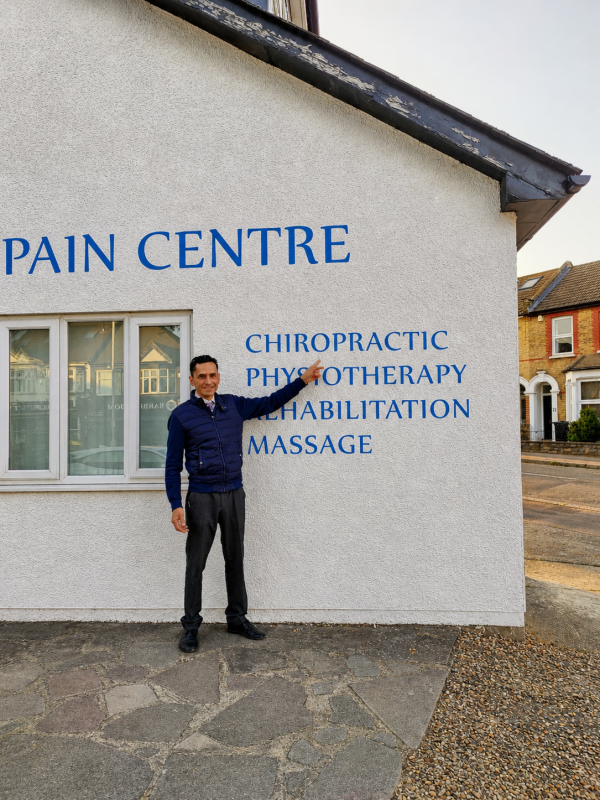
Author bio
Vasily Maslukovs has been treating backs and necks since 1994, beginning his clinical career in Latvia before moving to the UK.
He has been the owner and clinical director of The Back Pain Centre in South Woodford since 2012, four years after he qualified as a UK registered chiropractor.
His approach to care is built on the principle that lasting results require both precise clinical treatment and genuine patient understanding — of the body, of the condition, and of the habits that either support or undermine recovery.